
I can’t imagine this comes as a huge surprise, but one of the main reasons I came to Paris was to speak French. I’ve studied the language for a while now and, to slightly blow my own trumpet, I thought I was pretty decent at it – achieving A* at A Level, receiving a Prize for Modern Languages at school, and managing well throughout my courses at Edinburgh.
Therefore, you can maybe imagine my surprise – and hopelessness – when I found myself really struggling to maintain conversations in my first few weeks of living in Paris. Again, hindsight is a brilliant thing, and has led to the 4 point list below, which aims to demonstrate how to have a better stab than I did at tackling speaking the native language when you arrive:
- Accent: If you’ve met someone from Northern Ireland (fingers crossed) you’ll know that we have pretty strong accents. What I came to understand pretty quickly was that my N.I. accent was feeding into my French – to the point where, what I thought was perfect, articulate French, came across as well-intentioned gibberish from the listeners’ perspective.
Here’s the thing – studying languages at school and university and doing exams etc. is very different, I’ve found, to actually using them in the host country itself. Take me doing the French A Level in Northern Ireland for example. As I’ve mentioned already (and will try not to again, you’ll be glad to hear), I did pretty well in the exam, and due to this, was really confident in my French linguistic ability and speaking skills etc. I’d go as far to say that, at the ripe age of 18, I thought I was fluent enough to back myself well in an intellectual enough chat with nearly anyone I’d need to – shock horror, this was definitely not the case.
What I didn’t take into account at the time was, the pool of people in which were doing (and often marking!) the same A Level, are nearly always also Northern Irish natives, with Northern Irish accents. Go figure. This means that there’s far less scrutiny on an accent than there would in France simply because, in the nicest possible way to Northern Irish French speakers, our French accents are generally pretty below par unless you’ve lived in a native speaking country for a good few years. This is no real fault of any of us lot studying the language – it’s simply a result of the environment you learn the language within. That said, there’s no denying that it requires conscious, repetitive action to improve your standard to a higher level when on your year abroad.
Personally, I implemented various daily/weekly practices in order to improve. I could probably write a blog post on this alone, but the key idea is to listen to as much French as you can in subjects that interest you. For me, I stuck with French rap, gritty series’, rugby highlights, and cooking videos, to name a few. If you’re not interested in current political affairs there’s not much point listening to a 10 minute “ListentoFrench” podcast on Macron’s latest immigration bil – although, there’d definitely be no harm in doing so. Just in the same way Skepta sounds different to Simon Cowell, there’s a huge variation in French accents across the country, which can only begin to be learnt and understood by hearing them in the first place. Find what works for you and, if you can, take even 5-10 minutes a day to ensure you’re listening to, but importantly trying to understand, whatever you’ve picked.

- Confidence: I’d say I’m a pretty confident, articulate sort of guy. However, I often found myself stuttering and being lost for words in simple conversations, like buying a cinema ticket, in my first month or so of being here. My problem? My literate self-confidence not translating from English into French. This is completely natural; you have less vocabulary, less time spent speaking the language, and have to understand the responses of whoever you’re speaking too as well.
This linguistic situation can often exacerbate into a kind of fluster-worry-stutter cycle – something which I often seemed to find myself in. It comes to a point where you realise, firstly, people dont really care how “French” your French sounds as long as they can properly understand what you’re trying to say – and if they do it’s a them problem. Except a certain contigent of Parisians, and, in that case, the aforementioned still stands – it’s a them problem. Secondly, backing yourself and being as confident as possible (even if you don’t feel like it) works in your benefit as it increases conversation efficiency, fluency, and output. This will subsequently make you feel better about your own ability and improve your confidence; and then this cycle repeats. You get the picture: fluster-worry-stutter cycle < confidence-efficiency-fluency cycle.

- Immersion: Building on the previous point, immersion in the language is simply how you’ll improve on a compound level. Listening to French is great, but it’s no use if you’re only doing one aspect and are never bringing the words, intonations, accents etc. that you have heard into your everyday speaking and writing. Kind of like going to the gym but never doing legs. Could never be me… I’d recommend, again, using your genuine interests to get involved into many aspects of daily life as possible. For me, I became part of the Dauphine Rugby 1XV, paid a visit or two to a range of clubs and bars, invited people round for dinner as much as I could, and more – anything, really to just initiate conversations.
I’d say that the immersion into the PSL Dauphine rugby team was one of, if not the best, linguistic aid of my whole year abroad. First and foremost, I have to say that “les mecs” were just simply a brilliant group of lads to me – welcoming, good craic, kind, and, notably, more than happy to answer any questions I had regarding what they were saying in French. You see, what I found was, in true French fashion, quite a few of the students at Dauphine weren’t overly interested in getting to know us Erasmus students. It’s understandable (to an extent) – they’ve been raised to be very proudly Parisian and the idea of us randomly coming into their university for one year isn’t one they’re too fond of. Normally I’d just ignore this and try and get on with life but this it can become a slight annoyance when you have no one to practice the language you came to speak in the first place.
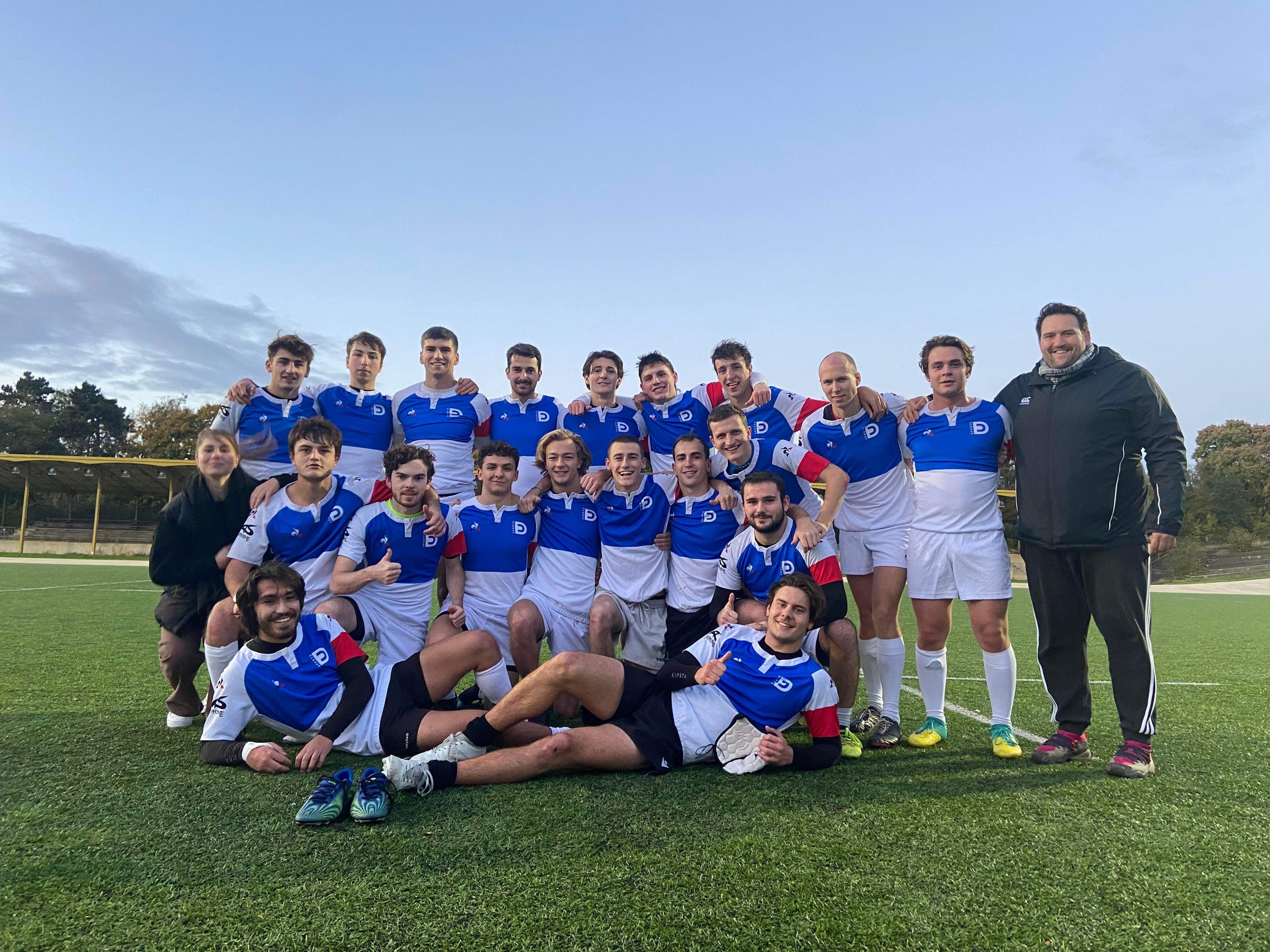
However, this was definitely not the case with the Dauphine rugby boys, otherwise known as RugbyDo. They welcomed me with open arms – both into the team and their social plans. In rugby terms, I started for the 1XV, playing weekly games against other Parisian Business schools, sometimes in pretty amazing places – like Stade Jean Bouin (pictured below) – the Stade Francais stadium which has a capacity of just under 20k. Jammy, I know. We would get the bus from university to training on a Monday and I have to admit, on the first occassion in doing so, I wasn’t sure I’d ever be able to properly integrate myself into conversations due to the level of speed and dialect they were using. However, a few weeks onwards and many, many, many “ça veut dire quoi?s” later, I was able to immerse myself into conversations with relative ease.

Even on the pitch itself, like any average outhalf, I’ve been prone to giving a good bit of light-hearted “chat” towards the opposition throughout a match. The boys were more than happy to get me up to speed with the dialect that would manage to ruffle a few feathers – and I used it accordingly – much to their delight. It’s a huge credit each and every one of them that I went from not being able to get a word in in any group scenario to being able to give more chirps to both opposition and referee than Sexton on a bad day.
In terms of social setting, we went to the pub regularly, watched the World Cup (certain memory of Harry Kane skying his penalty in the quarters), and I even got to serve behind the bar on the famous Dauphine “Rugby Night” – where the team runs a club night for the whole university. Like many things in life, my confidence to speak French was increased with the aid of a few beers and this was noted by the boys. However, try not to take it too far because there seems to be a stage where confidence is replaced by a complete in ability to speak the the language altogether. Or so I’ve heard…
The bottom line here is that being truly immersed within a group of native speakers who you are comfortable asking questions with will, in my opinion, improve your linguistic ability more than any class you’ll attend univeristy. Be it sport, music, pottery – literally anything – just tried to involve yourself and you’ll reap the benefits.
- Don’t freak out: Like I’ve touched on already, there are undoubtedly going to be times when you get stressed or anxious about not speaking enough, not maximising your opportunity, not immersing yourself in the culture, or something along those lines. Don’t worry. Don’t stress. Don’t freak out. It’s so easy to get caught up in the stresses of university work, meeting new people, and always having a good time, that it’s so easy to forget how wonderful a thing you’re doing in the first place. On many occasions I’ve had to simply take a minute to remind myself of this. You’re in such a beautiful city, living independently, with so much opportunity at your fingertips. It’s normal to feel shit sometimes, regardless of where you are, but don’t let this be a negatively defining factor in your Erasmus experience; instead try to make it the opposite in how you deal with it.
Academic Differences
Okay, so that’s a bit of an insight into general French language usage as a student, but I suspect you’re maybe keen to hear how university itself works here. I can only speak from a personal perspective, but I found a pretty big change in university life as an International Business with French student at The University of Edinburgh compared to as an Erasmus+ student at PSL Dauphine. Here’s why:
- Class Hours: each class at my university in Paris, PSL Dauphine, was 3 hours long with a 15-minute break in the middle. If this doesn’t sound ideal, imagine having multiple classes in a day. For example, Wednesdays in Semester 1 I was in classes in university from 10AM to 8:30PM every week. You’ll need to fuel yourself well with coffee and food which, thankfully, are really cheap in the CROUS cafeterias due to government subsidisation.

- Attire: I’ve often been prone for going with the slider, hoody, trackies approach to libraries and lectures in Edinburgh. Maximum comfort and hence maximum output from my POV. I tried this in my first couple days at Dauphine, and have to admit, I was greeted by looks of disdain from variously well dressed (we’re talking suits and briefcases on occasion), well-groomed students who were not used to seeing this kind of dressing at university. Bottom line is, try to dress well anytime you have a class or are heading to the library. This is nothing against sliders in the library, but will ensure you’re perceived as respectful, but also intelligent and well put together when meeting teachers and classmates.
- Academic Expectation: Again, this is only from my personal experience, but the French demand a lot more than UK universities in terms of workload and quality. I was pretty used to not doing too much in my 1st and 2nd year of Edinburgh and generally managing A/B grades in essays etc. but this simply isn’t feasible for courses in Paris. The teachers expect extensive research into essays, preparation for presentations (which are often), and revision for exams. This may sound like a bad thing (or not, if you’re a sweat), but believe it or not, I genuinely really enjoyed having to use my brain and take time to write and read up on things that I never would considered have otherwise – especially due to the following point.
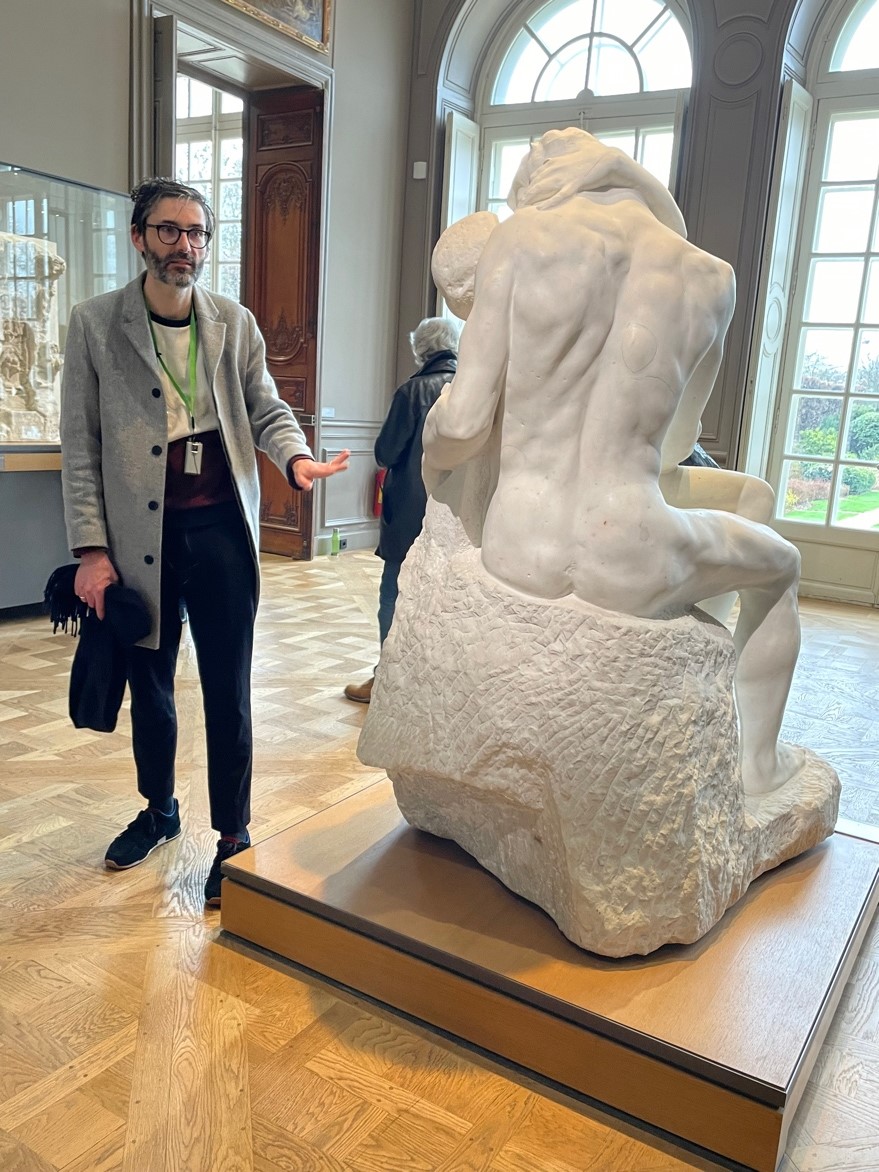
- Leeway: Although there’s no denying that there’s a pretty serious workload for university here, what made it manageable is the leeway you get in terms of the specificities of the work you’re doing. For example, in my Cross-Cultural Communications class I was writing essays on cross-cultural alcohol consumption trends and how the Swedes need a handbook to understand English sarcasm, whilst in my A.I. Development class it was all about how the Black Mirror episode ‘Hang the DJ’ provides insight into future uses of AI and dating. The teachers understand that you’ll be spending a lot of time into your work, and they tailor the classes so that you can maximise your potential by picking areas that interest you. It’s a win-win situation for both parties, and something that makes the work a lot more bearable and, on occasion (surely not) enjoyable.
I’m very conscious that I may come across as slightly “down” on university here but, honestly, I feel quite the opposite. It’s definitely a bit of a shock when arriving, which is what I’m trying to convey, but I’ve thoroughly enjoyed my time studying here. Like most things in life, the more effort you put in, the more you get back. I’ve learnt so much about aspects of business but also about myself, through my academic engagement and strongly advise that you do too. That said, I’d be lying if I said academia was the only reason I came to Paris, which leads onto my next point – stay tuned for The Fun Stuff!



 University of Edinburgh Go Abroad
Leave a comment