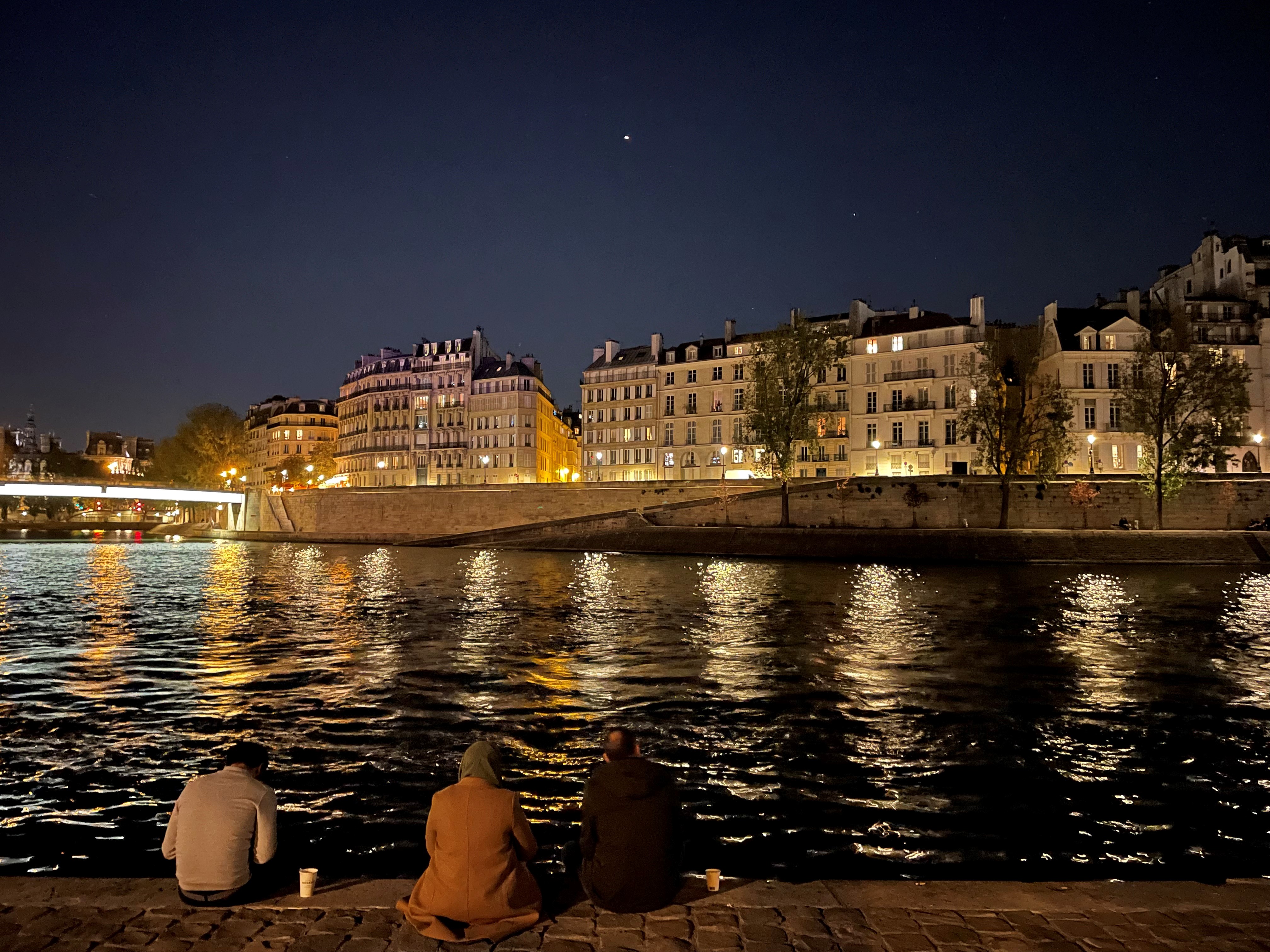
Introduction:
Ernest Hemingway once wrote “if you are lucky enough to have lived in Paris as a young man (or woman, come on Ernest), then wherever you go for the rest of your life, it stays with you, for Paris is a moveable feast”.
If you had asked me what he meant by this in my first week of coming here, I probably would’ve responded with a similar expression to that which I received from Parisians around the time when asking for directions. However, fast-forwarding one year onwards, I’m glad (and somewhat shocked) to say that I resonate greatly with what he’s going for.
From being scooted on a moped to training on first encounter with my rugby captain, to doing a speech in front of hundreds of PSL Dauphine Erasmus students, to running marathons with minimal training, it’s fair to say I’ve experienced things that I’ll cherish going forward in life – wherever I go.
Therefore, when asked by the Edinburgh University European Exchange team for a blog outlining my Erasmus experience, I thought it’d be remiss (and potentially rude) not to jump at the opportunity.
This mini-series will be split into four areas – practicalities, language, the fun stuff, and getting out of your comfort zone. I’ll also attach my Paris “to-do cheat sheet” which I used every time someone came to visit – in case anyone is simply reading for tips on exploring the city.
Feel free to read it all in depth, flick to whichever area interests or concerns you most, or simply let the pictures do the talking. I truly hope I’ll be able to help people in my position this time last year. If not, I’ll be making some of my unforgettable experiences literally unforgettable by getting them on the omnipresent web, and at the very least, should get a pretty decent LinkedIn post out of it all!
Please also feel free to share to anyone who may be interested and if you have any follow-up questions, my inbox is always open. D.
Practicalities: accommodation, travel, and expenses.
No one really likes admin; or so I thought before arriving here. That said, it’s something that needs done, especially when beginning life in a city where the metro needs to be frequented more than the bathroom. I’ve found that the degree to which I’m on top of the practical aspects of life here (which has varied, trust me) works in tandem with how much I enjoy the things I came to enjoy in the first place. Therefore, I’m addressing maximising practicality in Paris at the start of this blog – in a kind of “eat your vegetables before getting to the good stuff” way of thinking:
Accommodation:
From personal experience, nearly everyone you’ll ask will have got their accommodation in one of 2 ways:
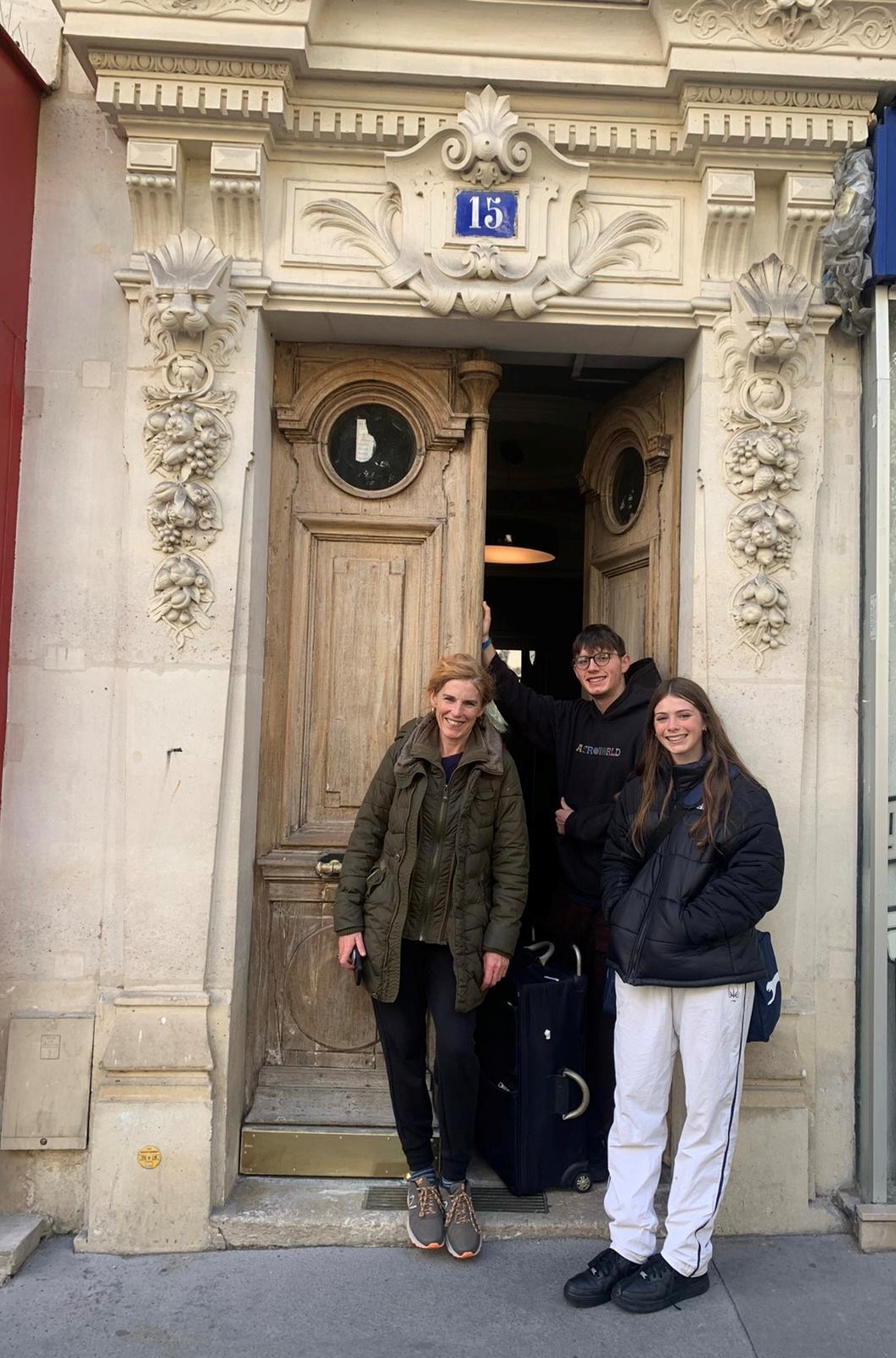
- Knowing someone who knows someone (who may know someone who knows someone etc… You get the gist). I was lucky enough to be in this boat and lucked out living in the 5th arrondissment, which I consider, probably biasedly, to be the best place to live for students. I was also lucky enough to live in the room beside one of my best mates, and if you’re wondering, no, that’s not him in the picture – that’s my dad. Getting private accommodation is great for flexibility in terms of size, location etc. but also for rent, so be wary.
- University aid i.e., access to halls of residence. Success rate on this depends massively on your university. Mine weren’t brilliant (slight understatement) at helping but I know of others who got apartments very easily. They’re usually not as central, but cheaper and obviously filled with students, which can be great for meeting people. I have friends in MLK and Bercy, both of which have nice interiors and cheap rents (compared to what else is available in Paris).
Travel:
If you’re here for the whole year, buy the Navigo R Student Pass. Simple as that. 350 EUR for the year and it gets you on every train, metro, and bus imaginable within the Ile de France region. A complete no brainer and something I’ve been grateful of on so many occasions, especially as travelling through the city is a daily occurrence. There’s only a small fee if you lose it as well, which I’ve done on a couple of occassions. If you’re here for 6 months, there’s a monthly Navigo Pass which is your best bet in terms of not being tied to something when you leave.

Expenses:
There’s no denying that Paris is expensive. From groceries to rent to beers (although, stay tuned for some great cheap bars), living here is going to cost you a bit, which is to be expected when living in what many consider to be the most beautiful city in Europe. That said, there are definitely ways of managing if you know how, some of which I’ll detail below:
- Work smarter, not harder. Being an Erasmus student comes with its own privileges, one of which is having access to a range funding both from the university and the government. You’ll need all the help you can get, so find out what you’re entitled to and take the time to fill out the paperwork and get it sent off ASAP. For me, I got my normal Maintenance Loan and the Erasmus+ Grant from Edinburgh. However, I know of others who got much more and much less than me.
That said, it’s extremely worth noting that, due to Brexit, any UK students studying abroad (assumingly the majority of those reading this) are no longer part of the Erasmus scheme. As far as I’m aware, it’s now the Turing scheme at Edinburgh, which I’ve heard is a lot more restrictive in terms of acquiring funds.
This is just one example of how leaving the EU has come back to bite us, but a very notable one in terms of making sure you’re managing financially whilst away. The same still applies though – find out what you’re entitled to ASAP, get the forms filled in and sent off, then make good use of what you receive.
- Go to ALDI / LIDL: You’ll be shocked at the prices in general supermarkets when arriving here. I still have flashbacks to reading the 60 EUR label for a single organic chicken breast on my first outing at my local Monoprix. LIDL / ALDI, although they take a bit longer to get to, charge far less for similar products and are really worthwhile shopping at it if you can.
- Stay true to yourself: Like always in life, you’re going to meet people with differing financial situations to your own on both sides of the spectrum. In Paris, I’ve often found myself encountering the higher end of the scale, i.e. hanging out with people who’ve more money than me. Due to this, it’s very easy to get carried away, especially when receiving the aforementioned grants, etc.
Keeping your own situation at the forefront of spending decisions will benefit you in the latter months of the exchange, and generally in life following university. I say this with wonderful power of hindsight, primarily developed from doing exactly not what I’m advising here in the first few months of arriving in the city, and then realising that I had to wise up as the exchange progressed.
Most people have money worries – to extremely varying degrees. If you can manage to stick to points 1 and 3 especially, then you’ll be massively helping your financial situation whilst abroad, and also following it. The same applies with all the other admin I’ve talked about above, and anything else you can think of. Find out how to maximise your situation, do the paper / online work ASAP, and stay true to your own situation when you reap the benefits.
Finally for now, I should mention that due to having an Irish passport, I had no need to do a visa to live abroad for the year. I have heard from numerous people (in fact, nearly everyone who’s mentioned the topic) that the visa application process is a nightmare. If you’re reading this and are already out there, i imagine you understand this struggle a lot better than I do. If not, I’d suggest getting started ASAP as there’s serious time that needs put in to get that piece of paper. Again, another indication of the joys of Brexit for university students abroad. Speaking of, let’s get into the aspects of actually being abroad which may interest you – firstly, the language.



 University of Edinburgh Go Abroad
Leave a comment